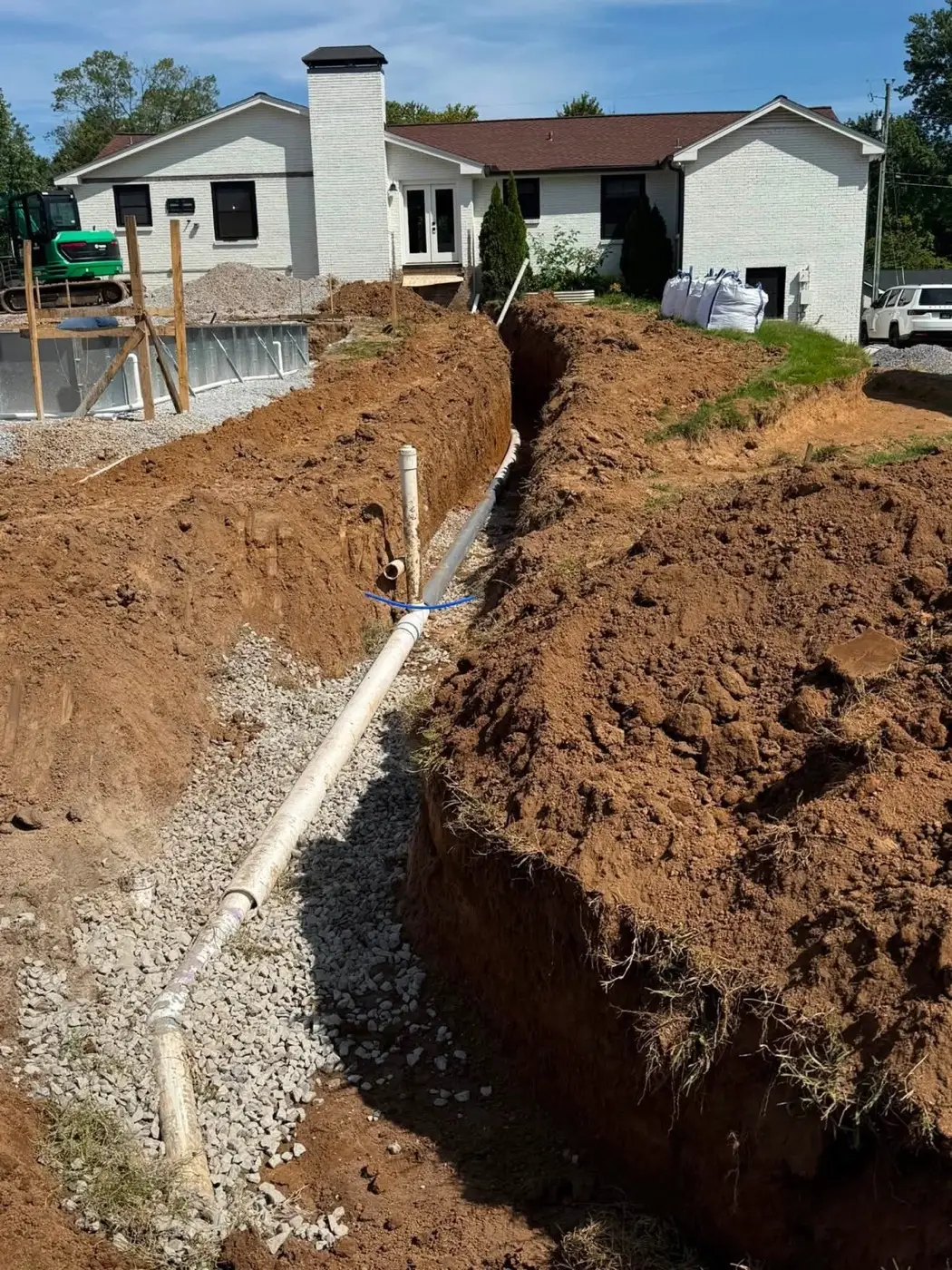
How do septic permits work in Williamson County, TN?
Williamson County properties get their septic permits from the Williamson County Department of Sewage Disposal Management, not from the state. Tennessee’s septic program runs through TDEC in most counties, but TDEC names Williamson one of nine contract counties that run their own programs. You apply locally, at 1320 West Main Street, Suite 411, in Franklin.
That one fact trips up half the advice you will read online. State-level articles tell you to file through TDEC’s portal. Do that for a Thompson’s Station or Franklin property and you are filing in the wrong office. Here is how the county process actually runs, with every number below pulled from the county’s own regulations or from tn.gov.
Who handles what
| Your property | Permit office |
|---|---|
| Thompson’s Station, Franklin, Brentwood, Nolensville, Fairview | Williamson County Dept. of Sewage Disposal Management |
| Spring Hill, Williamson County side | Williamson County Dept. of Sewage Disposal Management |
| Spring Hill, Maury County side | TDEC, Columbia field office |
| Columbia, Mount Pleasant, Lewisburg, Murfreesboro, Dickson | TDEC |
The county office answers at 615-790-5751, and applications run through the county’s online portal. We file this paperwork for our customers as part of our septic installation work, in whichever office the address calls for.
What are the steps to get a permit?
For a new home on a platted lot, the county’s own application procedure runs like this:
- Get a zoning certificate application from Community Development.
- Pay the construction permit fee.
- Certify the bedroom count in an affidavit. Bedrooms, not bathrooms, size the system.
- Certify the initial and reserve septic areas. Every lot needs soil for the system plus a second area held in reserve.
- Have a Tennessee licensed surveyor stake the house, the lot corners, and the septic areas, then cordon off the field areas.
- The county visits the site and checks that nothing in those areas has been disturbed.
- The permit issues.
Soil sits under all of it. State rule requires the soil mapping to come from an approved soil consultant, and the county’s own soil scientists also map and inspect. On raw acreage the county will even run an individual lot assessment on request, usually covering two to four acres around the planned house site.
Construction has its own gate. The installer pulls a separate permit to install, and it voids if a layout inspection is not requested within 45 days. Nothing gets covered before an inspector approves it. The county can force a buried system to be dug back up, and Building and Codes can hold the certificate of occupancy over a deficient system.
What does it cost and how long does it last?
State fees, from TDEC’s published schedule: $400 for a new conventional permit plus a $100 construction inspection, $500 plus $200 for an alternative system, and no fee on a repair permit. Williamson County sets its own numbers. The county’s alternative system permit is $550. It publishes no conventional system fee, so call the office for the current figure rather than trusting a blog number, including ours.
The permit itself is good for three years from issue. The state rule and the county regulation use the same three year clock. Soil maps last five years, and alternative system design plans last three.
On timelines: TDEC says its review generally takes 10 days and must finish within 45 days of a complete application. Williamson County publishes no processing timeline, so build slack into a construction schedule. The county also stood up a septic task force in late 2025 and has been adopting changes through 2026, so confirm current requirements with the office when you apply.
What rules catch homeowners off guard?
A few county rules do most of the surprising:
- The reserve area is real. Your lot needs room for a second, duplicate field, not just the first one. On smaller lots that spare ground decides whether a build can happen.
- Setbacks eat space. The county’s current table keeps the septic area 50 feet from a well or spring, 25 feet from the house, sinkholes, stream banks, pools, and road right of way, and 20 feet off property lines.
- Additions trigger permits. Add a bedroom, or grow the house by more than half its square footage, and the system has to be re-approved for the new load.
- Old undocumented systems carry a catch. If no public record documents the system, the county will not permit a remodel or addition until a backup septic area is identified and recorded.
- Repairs need permits too. A failed system needs a repair permit before work starts, though the state charges no fee for it. If your system is limping rather than dead, start with a septic tank repair visit to find out which side of that line you are on.
Yes, Tennessee lets an owner install a system on their own residence. Williamson County allows it through a formal exemption: you must personally perform every phase of the work, sign a hold-harmless, and accept that a botched dig can ruin the only approved soil on the lot. A licensed installer here carries a $30,000 bond for conventional work or $50,000 for alternative systems. That gap tells you how the county weighs the risk.
Frequently asked questions
Who issues septic permits in Williamson County?
The Williamson County Department of Sewage Disposal Management, at 1320 West Main Street in Franklin. Williamson is one of nine Tennessee contract counties that run their own septic programs, so TDEC’s state application does not apply here. That covers Thompson’s Station, Franklin, Brentwood, Nolensville, and the Williamson side of Spring Hill.
Can I install my own septic system in Tennessee?
State rule allows an owner to do the work on the home they live in, and Williamson County adds a formal exemption application. You must personally perform every phase, the permit and inspections still apply, and rentals are excluded. Most owners hire a licensed installer, who carries a $30,000 to $50,000 bond here.
How long does a septic permit last in Tennessee?
Three years from the date of issue. The state rule and the Williamson County regulations both set the same three year expiration. Related clocks differ: a soil map is good for five years, and an installer’s permit to install voids if a layout inspection is not requested within 45 days.
How much does a septic permit cost in Tennessee?
Through the state, $400 for a new conventional system plus a $100 inspection, or $500 plus $200 for an alternative system. Repair permits carry no fee. Williamson County sets its own fees: $550 for an alternative system permit, and the county publishes no conventional figure, so call 615-790-5751 for the current number.
When do I need a septic permit?
For a new system, for repairing a failed one, and for changes like relocating or upsizing. The county’s rule of thumb: adding bedrooms means a permit, because the system is sized to bedroom count. Sewage surfacing on the ground is a violation of state law, so a failing system needs a repair permit fast.
Does anything change while Spring Hill’s sewer moratorium is on?
Septic permitting runs on a separate track from city sewer, so the state’s block on new Spring Hill sewer connections does not stop a septic permit. What matters is your soil, lot size, and setbacks. On the Williamson side the county permits it; on the Maury side TDEC does.
Planning a build or staring at a failed system? What the whole job costs is covered in our guide to septic system costs in Tennessee. Or skip ahead: call Septic Superior at (615) 957-9682 and we will walk the permit with you. The estimate is free.