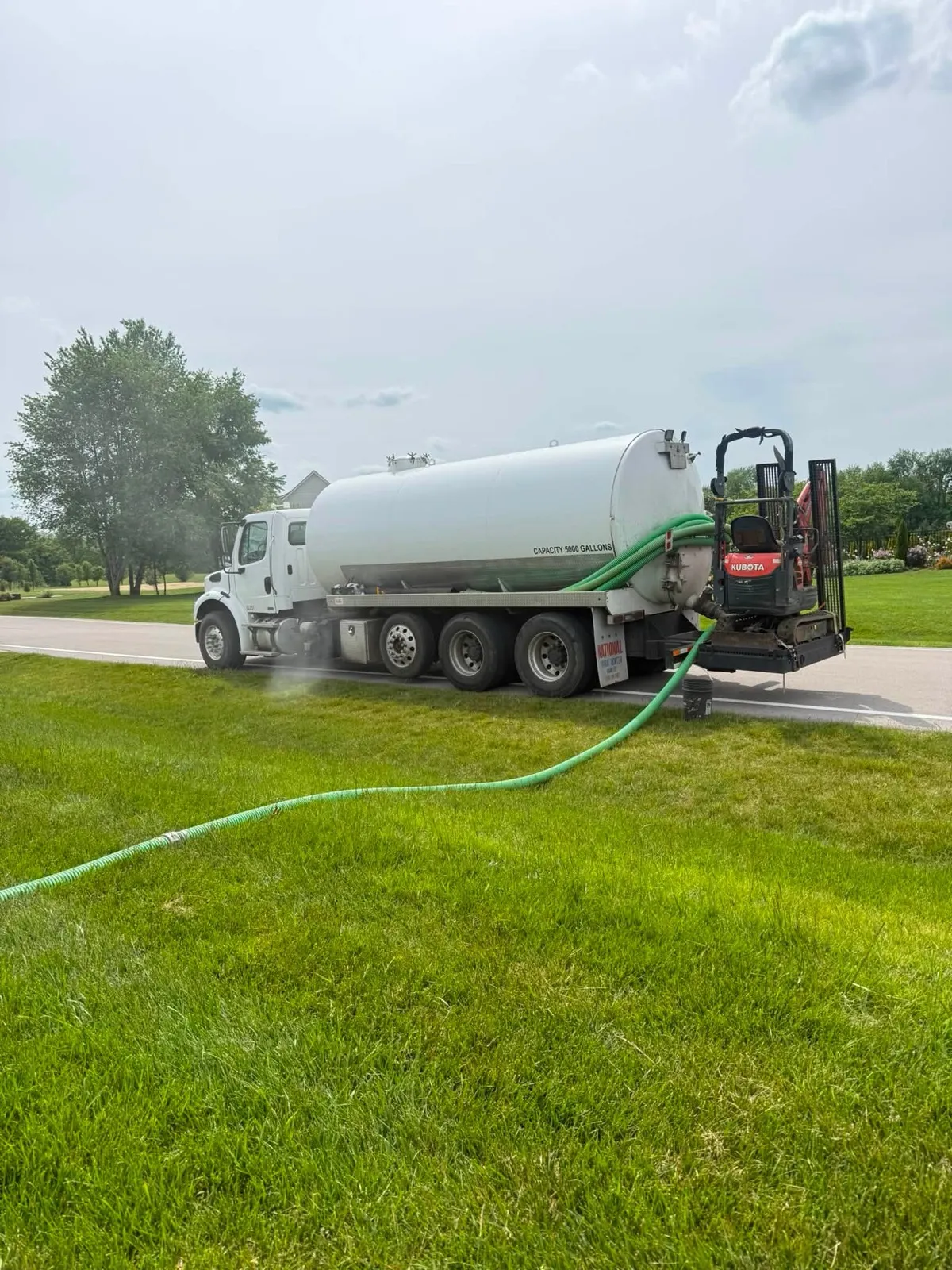
How often should you pump your septic tank in Tennessee?
Most Tennessee homes need a septic pump out every 3 to 5 years. That is the EPA’s standard for a typical household. Williamson County’s own septic regulations tighten it to every 2 to 5 years, and the Tennessee Department of Health has advised every 4. Your real interval comes down to tank size, how many people live in the house, and what goes down the drains.
Here is the schedule the guidance actually points to, and the local wrinkle that shortens it for a lot of Middle Tennessee homes.
What does the pumping schedule look like by tank size?
This table comes from the Penn State Extension derived frequency chart, the one most of the industry leans on. It assumes year-round occupancy and a conventional tank.
| Tank size | 2 people | 4 people | 6 people |
|---|---|---|---|
| 1,000 gallons | 5.9 years | 2.6 years | 1.5 years |
| 1,250 gallons | 7.5 years | 3.4 years | 2.0 years |
| 1,500 gallons | 9.1 years | 4.2 years | 2.6 years |
| 2,000 gallons | 12.4 years | 5.9 years | 3.7 years |
Run a garbage disposal? Subtract about 20 percent from your interval. The grinder loads the tank with solids it was never sized for, which is why Williamson County’s regulations advise against disposals outright.
Now the local wrinkle. Williamson County’s minimum tank sizes run small: 900 gallons for a 3 bedroom home and 1,000 gallons for a 4 bedroom. Put a family of four on that 1,000 gallon tank and the table says pump every 2.6 years, not 5. The clay under this county gives a drain field very little forgiveness, so the short end of the range is the safe end here.
What are the signs you waited too long?
The EPA’s list, which matches what we see in yards around Williamson County:
- Sewage backing up into toilets, tubs, or the lowest drain in the house
- Drains running slow through the whole house, not just one sink
- Sewage odor near the tank or over the field lines
- Bright green, spongy grass over the drain field, even in dry weather
- Standing water or soggy ground over the system
One sign is a phone call. Several at once usually means solids are already moving toward the field. A pump out through our septic tank pumping service includes a look at the baffles and the field, so you find out whether the tank was the whole story.
What happens if you skip pumping?
The economics are lopsided. The EPA prices routine maintenance at $250 to $500 every 3 to 5 years, against $5,000 to $15,000 to repair or replace a malfunctioning system. National 2026 data puts a typical pump out at $300 to $700, sized by the tank.
The mechanism is simple. Sludge builds on the tank bottom whether or not anyone opens the lid. Once it reaches the outlet, solids ride out into the drain field and clog the soil. The tank shrugs it off; the field does not. Fields in Middle Tennessee clay pass water 4 to 6 times slower than sandy ground, per the loading tables in the state rule, so a clogged trench here has nowhere to send the extra water. When a field reaches that point, you are reading our guide on repair versus replacement instead of this one.
Skipping ahead the other way works too. Regular pumping, an effluent filter rinse, and keeping vehicles off the field are most of what septic tank maintenance visits exist to do, and they are the cheapest years a system ever buys.
Do additives change the schedule?
No. The EPA’s position is that additives are not necessary for a working household system and are not recommended. Penn State Extension says the same about products sold as a substitute for pumping. The Tennessee Department of Health puts commercial septic additives on its do-not-use list.
The things that do move the schedule are habits. Fix running toilets, spread laundry across the week, keep grease and wipes out of the drains, and keep the water softener backwash out of the system, which is the Tennessee Department of Health’s advice. Every gallon and every solid you keep out of the tank is interval you get back.
Frequently asked questions
How often should a septic tank be pumped in Tennessee?
Every 3 to 5 years for most homes, which is the EPA’s standard. Williamson County’s own regulations tighten the recommendation to every 2 to 5 years. The Tennessee Department of Health has advised every 4 years. Your real interval depends on tank size, household size, and water habits.
How often does a 2,000 gallon septic tank need to be pumped?
Roughly every 6 years for a family of four, using the Penn State Extension derived schedule. Two people can stretch a 2,000 gallon tank past 12 years, while six people bring it down to about 3.7 years. A garbage disposal cuts any of those numbers by about 20 percent.
What are the signs that a septic tank is full?
Sewage backing up into drains, tubs and sinks draining slowly, sewage odor near the tank or field, and bright green spongy grass over the drain field even in dry weather. Any of those means the tank is overdue, and the drain field may already be taking damage.
How long can you go without pumping a septic tank?
Longer than you should, and that is the trap. Solids build every day, and once sludge reaches the outlet it moves into the drain field and clogs the soil. The EPA prices routine pumping at $250 to $500 and a failed system at $5,000 to $15,000. Skipping the small bill invites the big one.
Do septic tank additives let you skip pumping?
No. The EPA states additives are not necessary and does not recommend them, and Penn State Extension says the same about additives sold as a pumping substitute. Nothing poured down a drain removes the sludge sitting on the tank bottom. Only the pump truck does that.
Not sure when your tank was last pumped? Tell us the address and we will help you work it out. Call Septic Superior at (615) 957-9682. The estimate is free, and we will put your next date on the calendar so you never have to think about it again.